
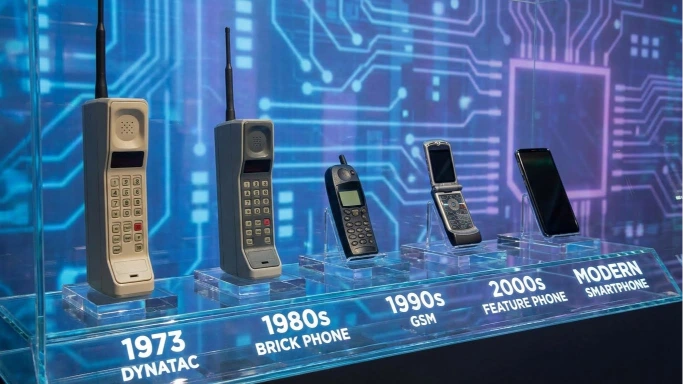
Invention of the Mobile Phone, Mobile phones have now become an essential part of our lives. From calling, texting, studying through online education, to even social media, everything is possible just because of mobile phones. The whole trend of humans communicating has changed completely due to these phones. Not everything falls from heaven. Development of mobile phones has been an innovation over two decades.
Table of Contents
Mobile Communication: Where did it all Begin?
Invention of the Mobile Phone, Before cell phones, there are communications done through landline telephones. These are telephones fixed at one location, like the home or office. As much as they were very helpful, there was a limitation on using them – they cannot be used while on the move. This triggered scientists and engineers all over the world to develop wireless communication technology.
However, the actual breakthrough happened in 1973, and that was when Martin Cooper, an engineer working for Motorola, produced the first handheld mobile phone.
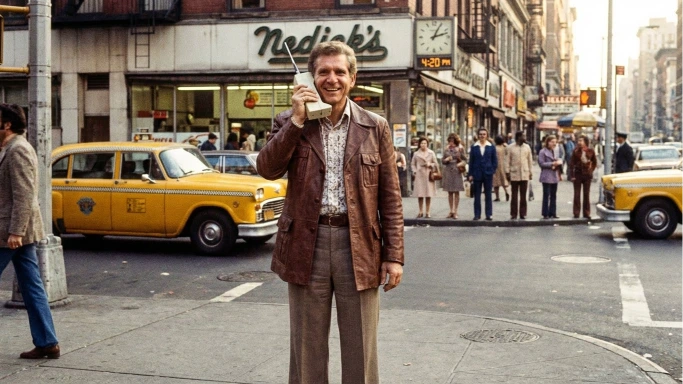
The first mobile phone call had happened
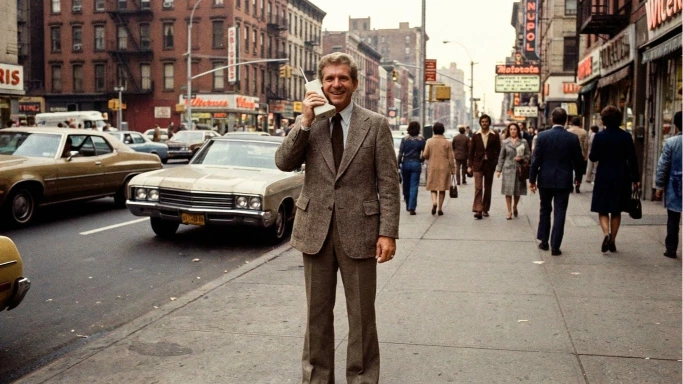
Invention of the Mobile Phone. The first call around the world using a mobile phone was made by one Martin Cooper in New York City on April 3rd, 1973. Martin Cooper used a prototype that he called the Motorola DynaTAC. The mobile phone used by Cooper was bulky, heavy, and looked nothing like the sleek and compact phones used today. It weighed about 1kg and had a lifespan of only a little while until it drained.
This historic call has indeed confirmed that it was possible to communicate in a personal manner. In fact, the development of mobile phones occurred, so to speak, and the future of mobile phones was born.
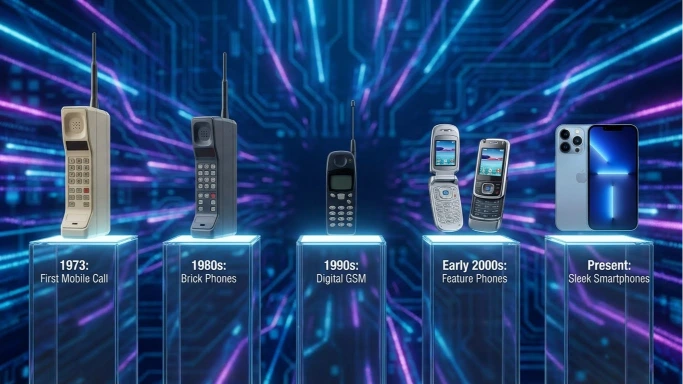
FROM PATENTING TO COMMUNITY by Rudi Pieters
Invention of the Mobile Phone, Even though the mobile phone existed since the time of its invention in 1973 by Martin Cooper of Motorola, it indeed took some time before it ever came out. After testing and all relevant approvals, Motorola launched its first public mobile phone in 1983.
This device was to become known as the Motorola DynaTAC 8000X. Not only was it a pricey unit that sold for around $4,000 USD, but it was definitely out of reach of many professionals, let alone most individuals. However, it was to change the way that people considered communication.
Invention of the Mobile Phone: From 1973 to Modern Smartphones
| Era / Year | Device / Innovation | Key Features | Impact on Society |
|---|---|---|---|
| 1973 | Motorola DynaTAC Prototype (Martin Cooper) | First handheld mobile phone, 1 kg weight, few minutes battery | First-ever mobile call, beginning of wireless communication |
| 1983 | Motorola DynaTAC 8000X | First commercially available mobile phone, cost $4,000 | Only for elites; huge breakthrough in portable communication |
| 1990s | Early GSM Phones | Smaller size, SMS texting, better battery | Mass adoption begins, texting becomes popular |
| Early 2000s | Feature Phones | Color screens, cameras, internet (WAP), polyphonic ringtones | Mobile phones become mainstream worldwide |
| 2007–2010 | Rise of Smartphones | Touchscreens, apps, browsers, multimedia, WiFi | Communication, business, education transformed |
| 2020s | Modern AI Smartphones | High-speed internet, GPS, mobile banking, video calls, AI assistants | Phones become mini-computers, essential in everyday life |
Cellular Phones: Evolution and Development – Introduction
Invention of the Mobile Phone, Technology began to move at an almost fast pace with the launch of the first commercial mobile phone. Mobile phones began to get small, light, and cheaper in the 1990s. There was also an increase in the development of services like text messages commonly known as SMS, call storage, and increased battery life.
Invention of the Mobile Phone By the early 2000s, mobile phones became a common sight in literally every part of the world. The colors and pixel resolutions of their screens, along with their capability to support cameras, web browsers, and internet access, soon became norms. And with the advent of smart phones later, modern mobile phones have also been shaped into personal mini-computers.
Revolution of Smartphones | Technology
The invention of smartphones occasioned another major shift in mobile technology. Smartphones were created in a way that enables one to assist or combine communication, computation, or do things like surfing the net, using applications, or access social platforms. This has significantly impacted the way learning takes place, the way business transactions occur, the way health is delivered, and the way people get entertained.
Invention of the Mobile Phone resulation, The current smartphone is faster, smarter, and more connected. The invention of video conferences, GPS systems, mobile banking services, and AI was achieved in the very first invention of a smartphone in the year 1973.
Effects of Mobile Phones to Society
The impact of invention for society is huge. This mobile phone connects people from different countries and different continents; thus, it makes the world smaller. Students can participate in online classes, business deals can be carried out internationally, and families can connect in a split second. However, all these-have emergency services, reporting, and even social movements-changed considerably with cell phones.
Invention of the Mobile Phone, For instance, cell phones have improved education, healthcare, and access to banking in developing nations. From a Brick to a Smart Device Seeing the progress achieved in the use of mobile phones, it’s just astounding to talk about. An invention begun by this heavy and very pricey device in the hands of a very limited number of people has now not only been made light and portable but has also proven itself to be a necessity in the hands of billions of people right across the world.
Conclusion
Invention of the Mobile Phone is in the year 1973, the impact of its invention is still surging with every passing year. Right from the first call made on the very first prototype of the mobile phone to the modern smartphone, the mobile phone has led to drastic changes in the manner in which human beings live, work, and communicate. It was not just any technological innovation in the sense