
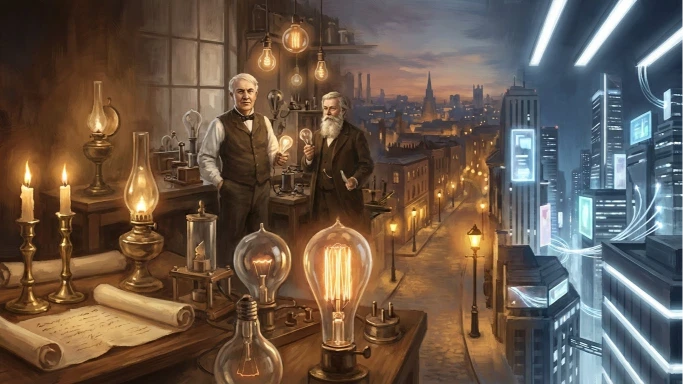
Few human creations have reshaped daily life as quietly yet as powerfully as the electric light. Long before glowing screens and smart devices, humanity’s nights were ruled by darkness, fire, and flickering flames. The journey toward reliable electric light is a story of patience, rivalry, failure, and persistence. Understanding how this invention emerged helps us appreciate not only the technology itself but also the people and societies transformed by it.
This article explores the long, fascinating journey behind the light bulb invented and why its impact still shapes our modern world. Rather than a single “eureka” moment, the invention was a gradual process built on many minds and many experiments. When the light bulb invented became a practical reality, it permanently altered how humans worked, learned, and lived.
Table of Contents
Life Before Electric Light
Before electricity illuminated homes and streets, people relied on natural light during the day and fire-based solutions at night. Candles, oil lamps, and gas lighting were the norm for centuries. While useful, they were dangerous, smoky, and inefficient. Fires were common, and light quality was poor.
The desire for safer, brighter, and longer-lasting light pushed scientists to experiment with electricity. The moment the light bulb was invented shifted lighting away from open flames, it marked a dramatic break from thousands of years of dependence on fire. When the light bulb was invented , it reached ordinary households, it fundamentally changed how people structured their time and activities.
Early Scientific Foundations
The idea of producing light through electricity did not appear overnight. In the early 19th century, scientists began experimenting with electric currents and glowing materials. Early arc lamps produced intense light but were too bright, expensive, and unstable for home use.
These early breakthroughs laid the groundwork for what would come later. Without this foundational research, the light bulb invented would never have moved beyond theory. Each experiment successful or not contributed to the moment when the light bulb invented could finally be practical, affordable, and safe.
Experiments That Shaped the Breakthrough
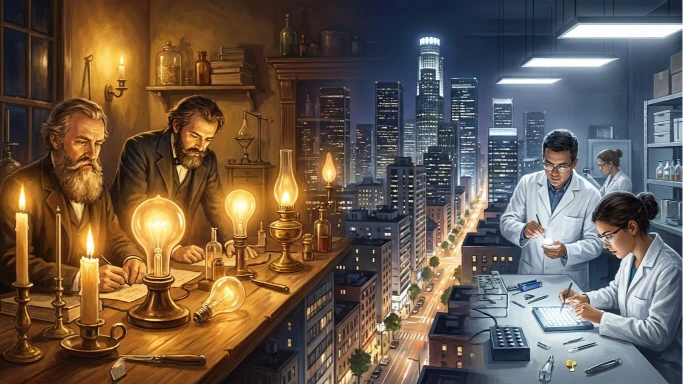
Inventors across Europe and America tested different filaments, vacuums, and electrical systems. Some bulbs glowed only for seconds; others burned out almost immediately. The challenge was not just making light, but making it last.
These repeated failures were essential. Step by step, inventors learned which materials resisted heat and which designs wasted energy. Through this trial-and-error process, the light bulb invented slowly moved closer to everyday use. Each improvement brought society nearer to the point where the light bulb invented would no longer be a laboratory curiosity.
Debunking the “Single Inventor” Myth
Many people believe one famous name alone created the light bulb, but history tells a more complex story. The popular narrative oversimplifies decades of global experimentation. In truth, the invention was the result of collaboration sometimes intentional, sometimes competitive.
Understanding this helps correct the idea that the light bulb invented was the work of a single moment or person. Instead, the light bulb invented represents cumulative human effort, where improvements built upon earlier discoveries.
Key Contributors to Electric Lighting
To understand how electric lighting evolved, it helps to look at some of the major contributors and their roles.
| Inventor | Contribution | Time Period |
| Humphry Davy | Early electric arc lighting | Early 1800s |
| Warren de la Rue | Platinum filament design | 1840s |
| Joseph Swan | Practical incandescent lamp | 1870s |
| Thomas Edison | Long-lasting, commercial bulb | 1879 |
Each of these innovators pushed the idea forward. Together, they ensured the light bulb invented was not just possible but usable. Without their combined work, the light bulb invented would have remained unreliable and expensive.
Commercialization and Mass Adoption
Invention alone does not change the world distribution does. Once electric bulbs became reliable, companies began building power stations and wiring cities. This infrastructure allowed homes, businesses, and streets to adopt electric lighting at scale.
The moment the light bulb invented entered mass production, it reshaped urban life. Factories could operate longer hours, cities became safer at night, and homes gained new comfort. As the light bulb was invented and spread globally, it became a symbol of progress and modernization.
Social and Cultural Transformation
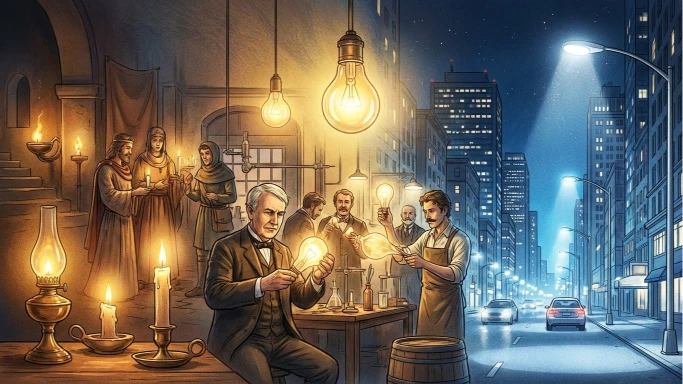
Electric light changed more than visibility it changed behavior. Nights became productive. Reading, studying, and working after sunset became normal. Public spaces grew safer, and nightlife expanded.
When the light bulb was invented , altered the rhythm of daily life, it quietly reshaped culture itself. Even today, our 24-hour societies trace their origins back to the moment the light bulb invented made darkness optional rather than inevitable.
Evolution of Light Bulb Technology
The original incandescent bulb was only the beginning. Over time, technology improved efficiency, lifespan, and sustainability.
| Bulb Type | Key Feature | Average Lifespan |
| Incandescent | Warm light, high energy use | ~1,000 hours |
| Fluorescent | Energy-efficient | ~10,000 hours |
| LED | Long-lasting, low energy use | 25,000+ hours |
These innovations show how the light bulb was invented and continued evolving long after its initial success. Even today, advancements built on the foundation established when the light bulb was first invented became practical.
Environmental and Economic Impact
Modern lighting plays a major role in energy consumption. Efficient bulbs reduce electricity demand, lower costs, and cut emissions. This evolution matters as the world faces climate challenges.
The long-term value of the light bulb invented lies not only in illumination but also in efficiency. As the light bulb invented continues to improve through technology, its environmental footprint shrinks while its usefulness grows.
Why the Invention Still Matters Today
It is easy to overlook everyday technology, but electric lighting remains essential. From hospitals to schools to homes, modern life depends on reliable light. Innovations like smart lighting and solar-powered bulbs continue the legacy.
Even now, the importance of the light bulb invented is evident everywhere. From economic growth to education, the light bulb invented remains one of humanity’s most transformative achievements.
Conclusion: A Bright Legacy
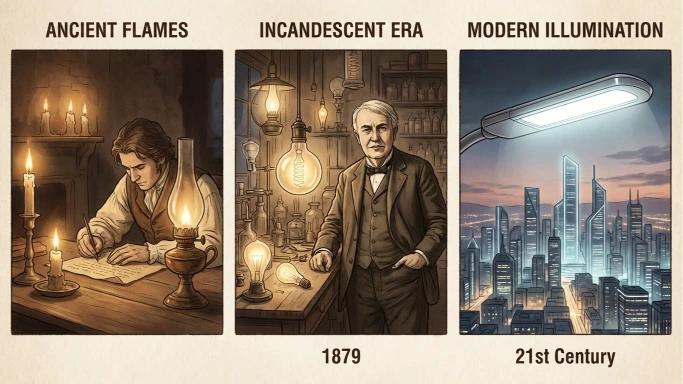
The story of electric light is not just about science it is about persistence, collaboration, and human ambition. What began as fragile experiments became a global necessity. The invention reshaped work, culture, safety, and daily routines across the planet.
When we reflect on how the light bulb was invented and transformed society, we see more than a device we see a turning point in human history. And as technology advances, the legacy of the light bulb invented continues to illuminate the path forward.