
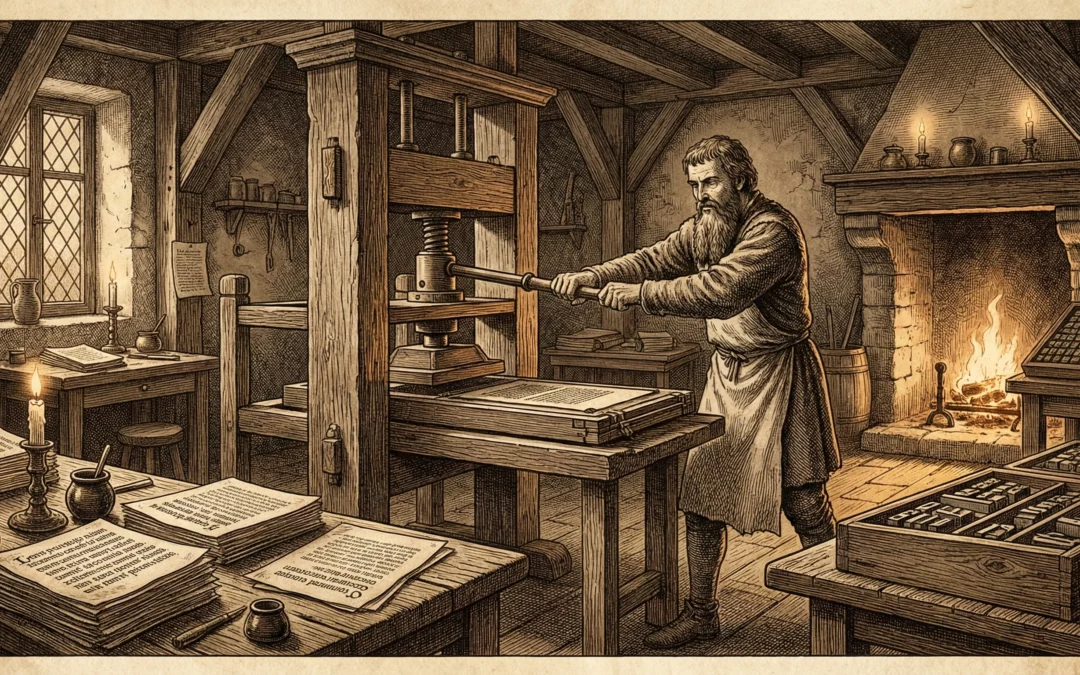
Humanity has always wanted one thing: to spread ideas without burning through half a lifetime carving them into stone like some overcaffeinated caveman. That’s why the question “when was the printing press invented” isn’t just a historical curiosity it’s the moment the whole world stopped writing like snails and started communicating like humans with deadlines. And oh boy, the answer flipped civilization on its head harder than a plot twist in a bad Netflix show.
But before we dive into the drama, power moves, and cultural chaos the printing press unleashed, let’s start with the keyword that brought you here: “when was the printing press invented.” Don’t worry, you’ll see it plenty Google will be fed like a king today.
Table of Contents
The Big Question: When Did This Thing Actually Show Up?
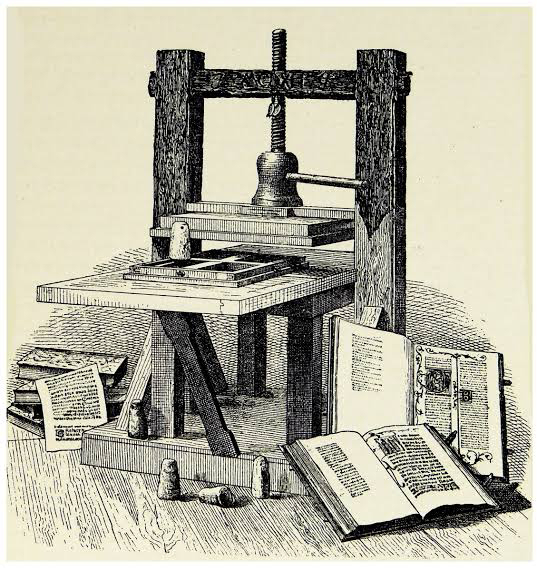
If you’re still whispering “when was the printing press invented” like it’s a secret spell that summons Gutenberg, here’s the straight answer: the printing press rolled into existence around 1440, courtesy of Johannes Gutenberg a man who basically said, “What if books didn’t take eight years to make?”
Now, is this the moment people finally started reading instead of guessing life from rumors? Absolutely. Ask anyone in 15th-century Europe; half of them thought reading was witchcraft until this machine pulled up.
And since you’re probably still thinking “when was the printing press invented” for SEO reasons, yes, we’re gonna keep that phrase spinning like a DJ who only knows one track.
Gutenberg: The OG Tech Bro
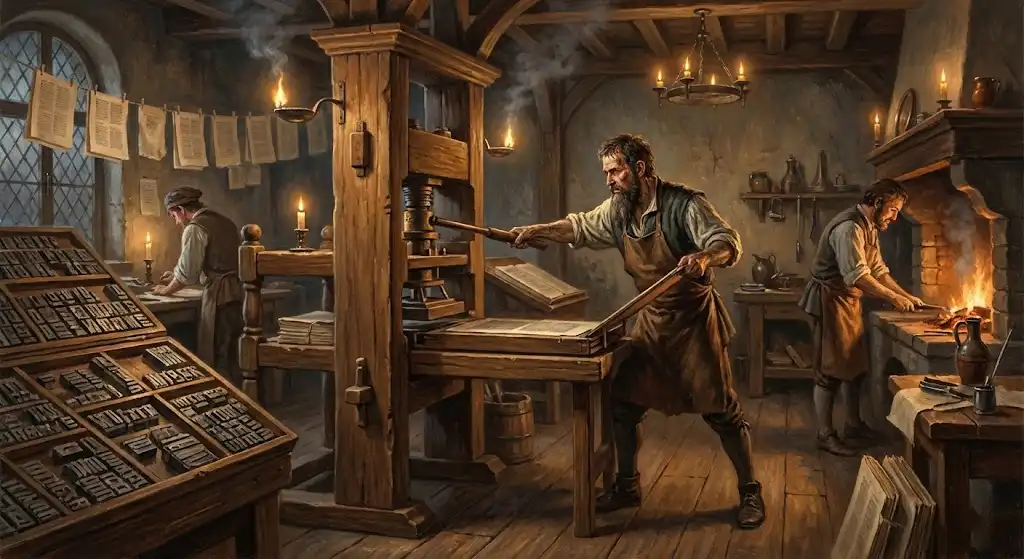
Gutenberg didn’t just wake up one day and think, “Let me invent history’s biggest productivity hack.” The man experimented with metals, molds, inks, and mechanical systems until he cooked up something world-changing.
People today brag about releasing a new app. Gutenberg? He released the printing press, and every monk copying books by hand felt personally attacked. Imagine spending three years writing one Bible and some guy shows up with a machine pumping out pages like it’s nothing. Savage.
So yes, “when was the printing press invented” links right back to Gutenberg’s 15th-century grind the chaotic, medieval version of tech innovation, minus the hoodies.
How the Printing Press Flipped Civilization
Let’s keep it real: before this invention, getting information was like trying to catch Wi-Fi in a basement. Slow. Painful. Mostly wrong. Then boom mass production of books.
And because Google loves clarity, here’s another hit of “when was the printing press invented.”
This machine didn’t just help people read; it triggered:
- The Renaissance blowing up like a mind-expansion festival
- The Reformation, where people suddenly read things for themselves and said, “Wait a minute…”
- The birth of mass education
- Newspapers, pamphlets, and eventually your cousin’s conspiracy blog
All of it traces back to “when was the printing press invented” around 1440, and the world’s been loud ever since.
A Friendly Comparison
To get this straight, let’s drop a small table before your brain melts. Even SEO robots like tables.
Historical Snapshot Table
| Aspect | Before Printing Press | After Printing Press |
|---|---|---|
| Books | Rare, handcrafted, expensive | Cheap(ish), widely available |
| Information speed | Slower than a snail in mud | Spread like gossip in a high school |
| Literacy | Mostly elites | Everyone started joining the reading party |
| Knowledge control | Locked by institutions | Suddenly open to the masses |
| Cultural change | Minimal | Explosive. World-level chaos. |
Why the World Needed This Machine
Imagine asking “when was the printing press invented” in a world where everything is handwritten. You’d probably wait three months for someone to answer because they’d still be copying a paragraph. Life was inefficient. Humanity needed this upgrade.
Once the press arrived, ideas didn’t just travel they sprinted. Movements formed. Opinions spread. And the speed of thought got turbo-boosted like it drank an energy drink.
To put it simply: the printing press was humanity’s first “viral content” tool, except instead of memes, it spread revolutions.

Technology Evolves, But Gutenberg Started the Fire
If you think TikTok spreads ideas fast, imagine the first time people saw printed text. Minds were blown. Scholars started hoarding books like some people hoard crypto. And suddenly, everyone had something to say.
This is why historians keep circling back to the moment “when was the printing press invented” because it marks the birth of modern communication, education, and yes, even the chaos of social media.
But Gutenberg didn’t do it for clout. He did it because progress doesn’t happen by being gentle it happens by smashing old systems like a villain with ambition.
The Global Ripple Effect
Let’s hit another dose of our golden keyword: “when was the printing press invented.”
Because without that moment, the world today would look like this:
- Education? Elite only.
- Science? Slow. Painful. People arguing about the shape of the Earth.
- Literature? Maybe five books total.
- Democracy? Hard to run when no one can read ballots.
See why this invention matters? It didn’t just change Europe it changed everything everywhere.
Modern Printing and the Legacy of 1440
Even though we now have digital printers, PDFs, ebooks, and AI (hi), everything traces back to that one spark in 1440. Every device you use to create, print, or share information is basically one giant remix of Gutenberg’s idea.
And yes, one last time for the ranking goods: “when was the printing press invented.”
Final Thoughts
So you came asking “when was the printing press invented,” and now you know 1440, Gutenberg, Europe, chaos unleashed, world forever changed.
This machine didn’t just print books. It printed revolution. It printed knowledge. It printed the backbone of modern civilization while the rest of the world was still trying to figure out handwriting.